Architectural patterns for modular monoliths that enable fast flow
architecting modular monolith fast flowContact me for information about consulting and training at your company.
The MEAP for Microservices Patterns 2nd edition is now available
In this article, I describe three architectural patterns for modular monoliths. These patterns are based on my experience developing both monoliths and microservices.
You will learn about these and other patterns in my Architecting for fast flow: enabling DevOps and Team Topologies workshop, 9am-11am CET/4pm-7pm Korea Time, September 23th-25th, 2024. 20% discount for groups of 6 or more.
Designing monoliths for fast flow
The primary concerns when using the monolithic architecture pattern are:
- Managing the complexity of a large codebase
- Maximizing team autonomy despite the single code base
- Accelerating the single deployment pipeline in order to still provide fast feedback
There are three patterns that address these concerns:
- Modular monolith, aka. domain-oriented monolith
- Domain module API
- Domain API build module
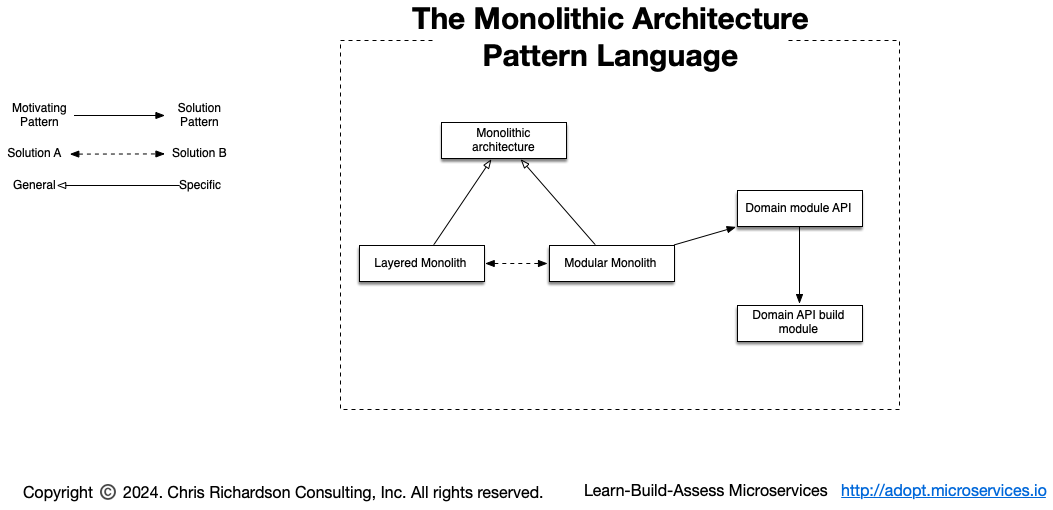
Let’s first look at the modular monolith pattern.
Pattern: Modular monolith, aka. domain-oriented monolith
Organize a monolith as a collection of loosely coupled, domain modules that are based on DDD subdomains/bounded context rather than technical layers in order to manage complexity and improve team autonomy.
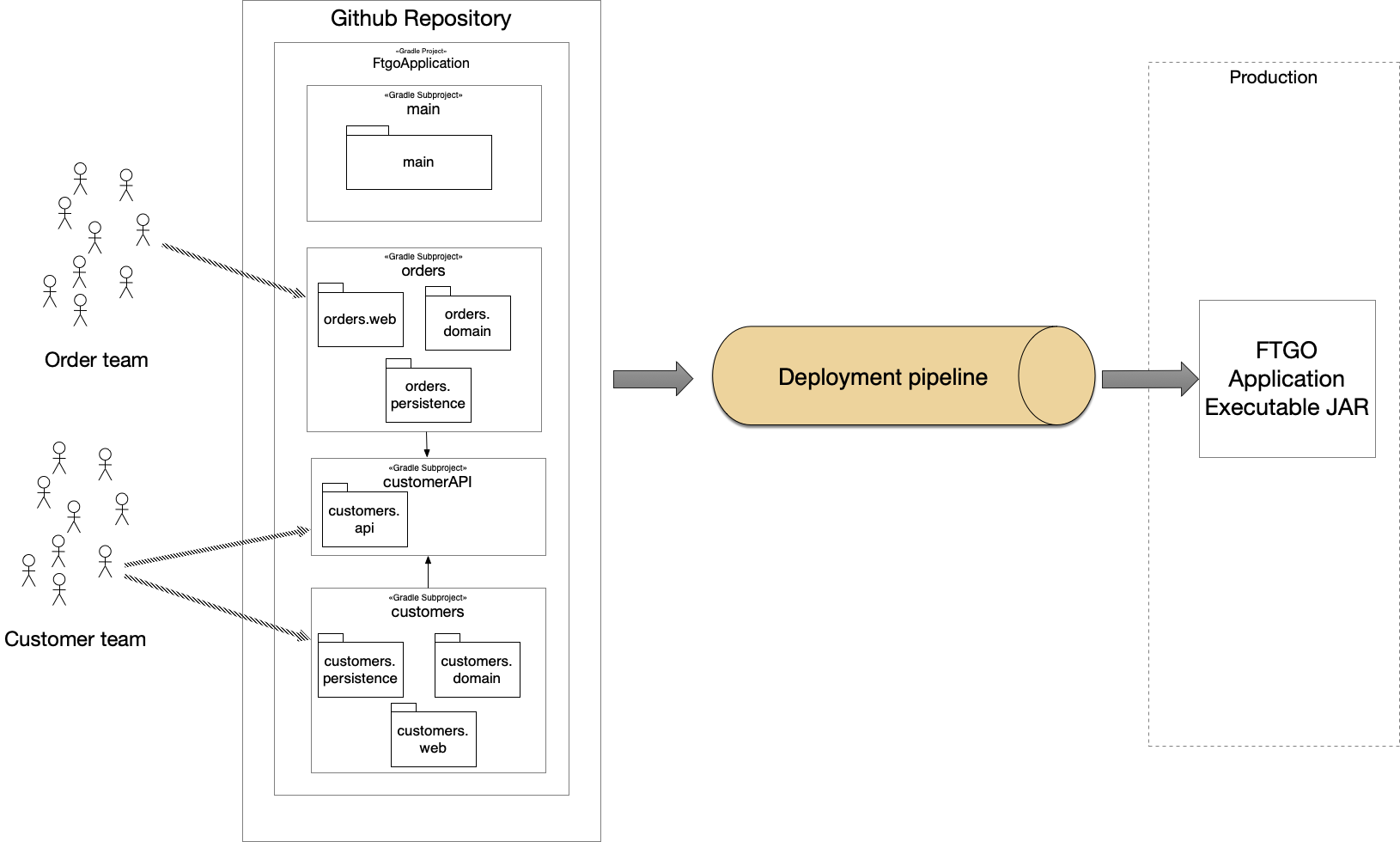
For more information, see The modular monolith, which introduces the basic idea, and No such thing as a modular monolith, which explains why the term ‘modular monolith’ is a misnomer.
Pattern: Domain module API
Encapsulate each domain module’s implementations details, which includes its database schema, behind a stable, facade-style API in order to reduce loose design-time coupling between modules and improve testability.
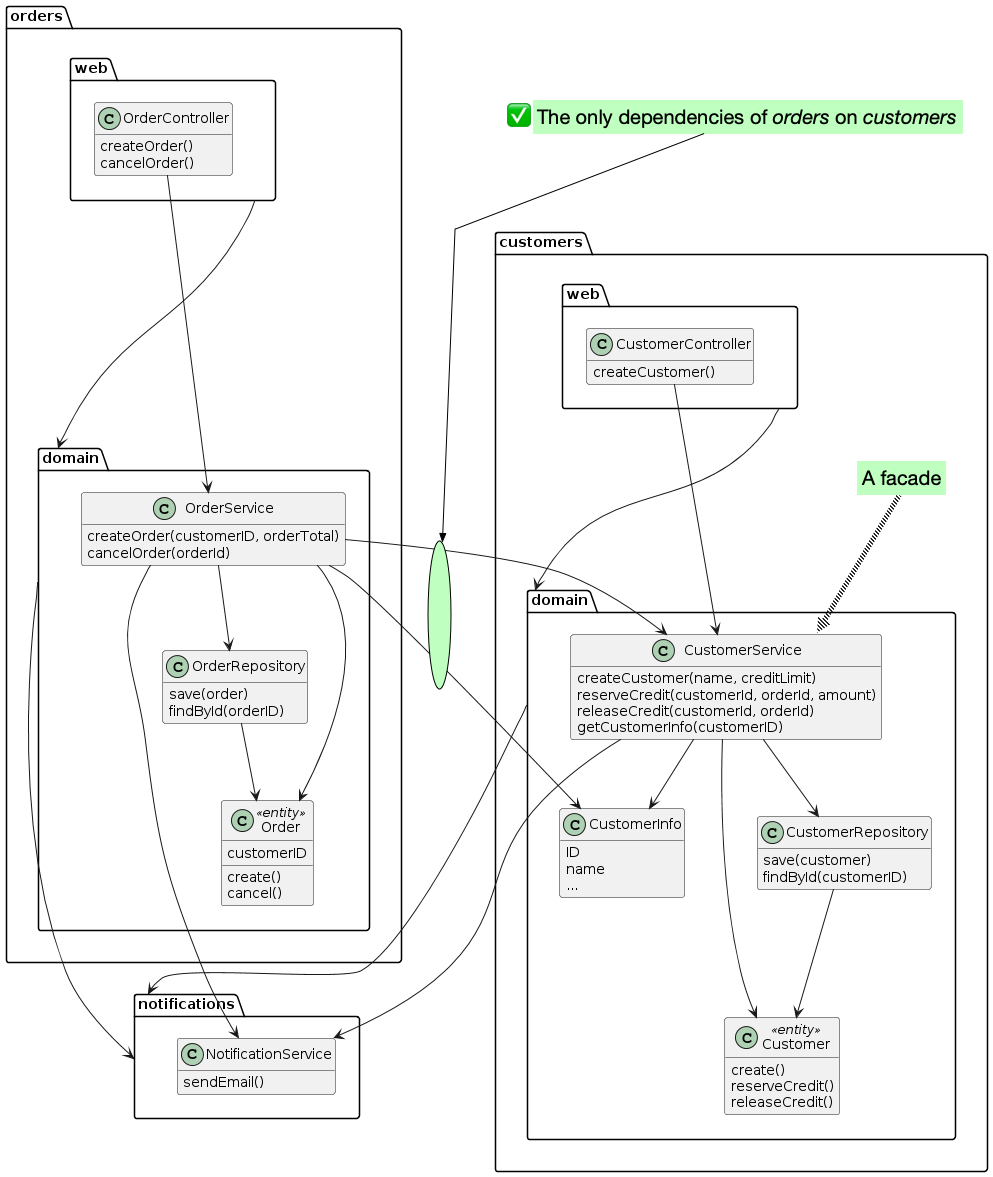
For more information, see Encapsulating the customers domain behind a facade.
Pattern: Domain API build module
Define a separate build module (e.g. Gradle subproject) for the domain module’s API, which the domain module’s clients depend upon (rather than the implementation), in order to reduce build-time coupling and accelerate the deployment pipeline.
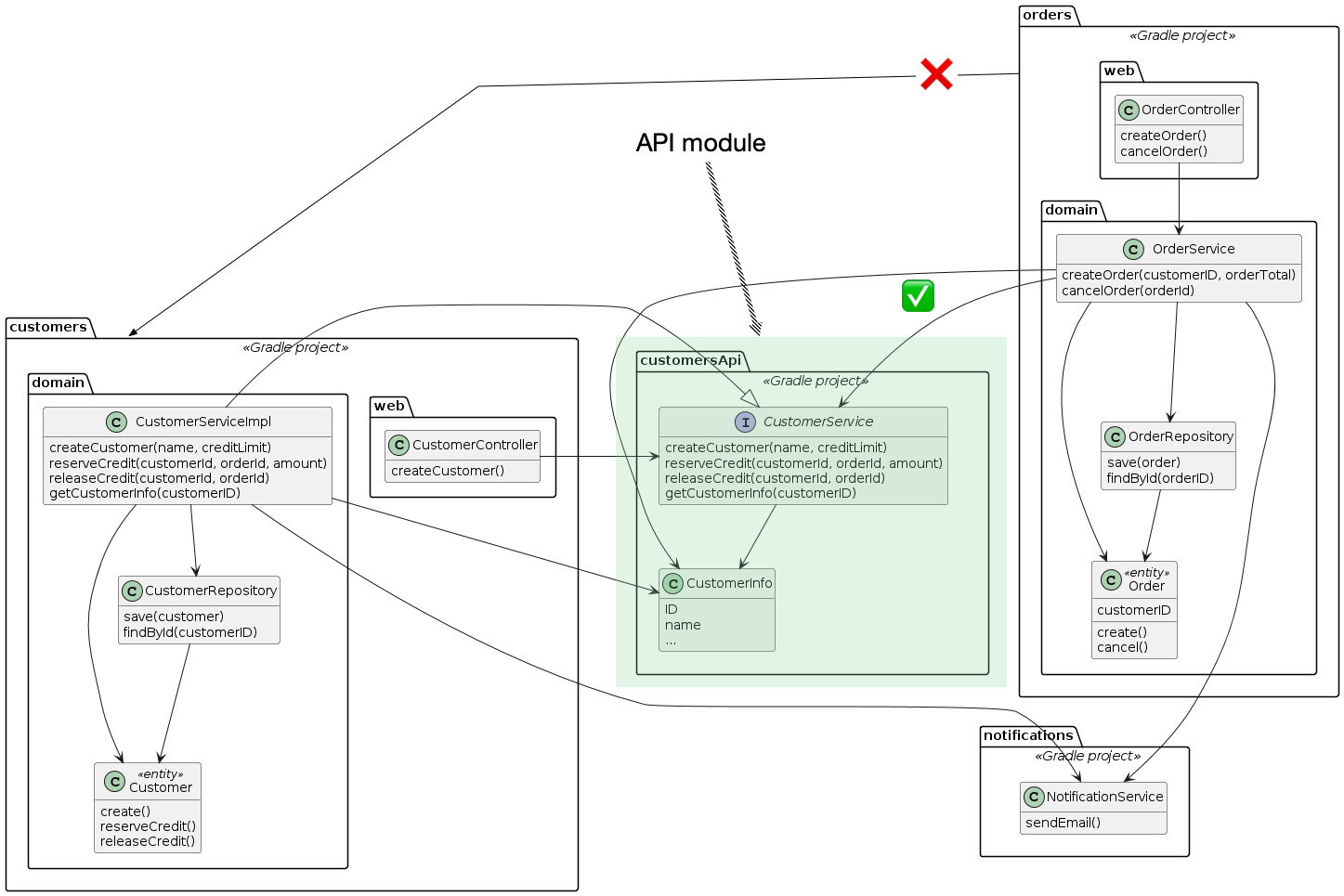
For more information, see Using domain API modules to reduce build-time coupling.
Want to learn more
You will learn about these and other patterns in my Architecting for fast flow: enabling DevOps and Team Topologies workshop, 9am-11am CET/4pm-7pm Korea Time, September 23th-25th, 2024. 20% discount for groups of 6 or more.
Need help with modernizing your architecture?
I help organizations modernize safely and avoid creating a modern legacy system — a new architecture with the same old problems. If you’re planning or struggling with a modernization effort, I can help.
Learn more about my modernization and architecture advisory work →


 Premium content now available for paid subscribers at